


Why Better Prompts Don’t Fix AI Coding Accuracy


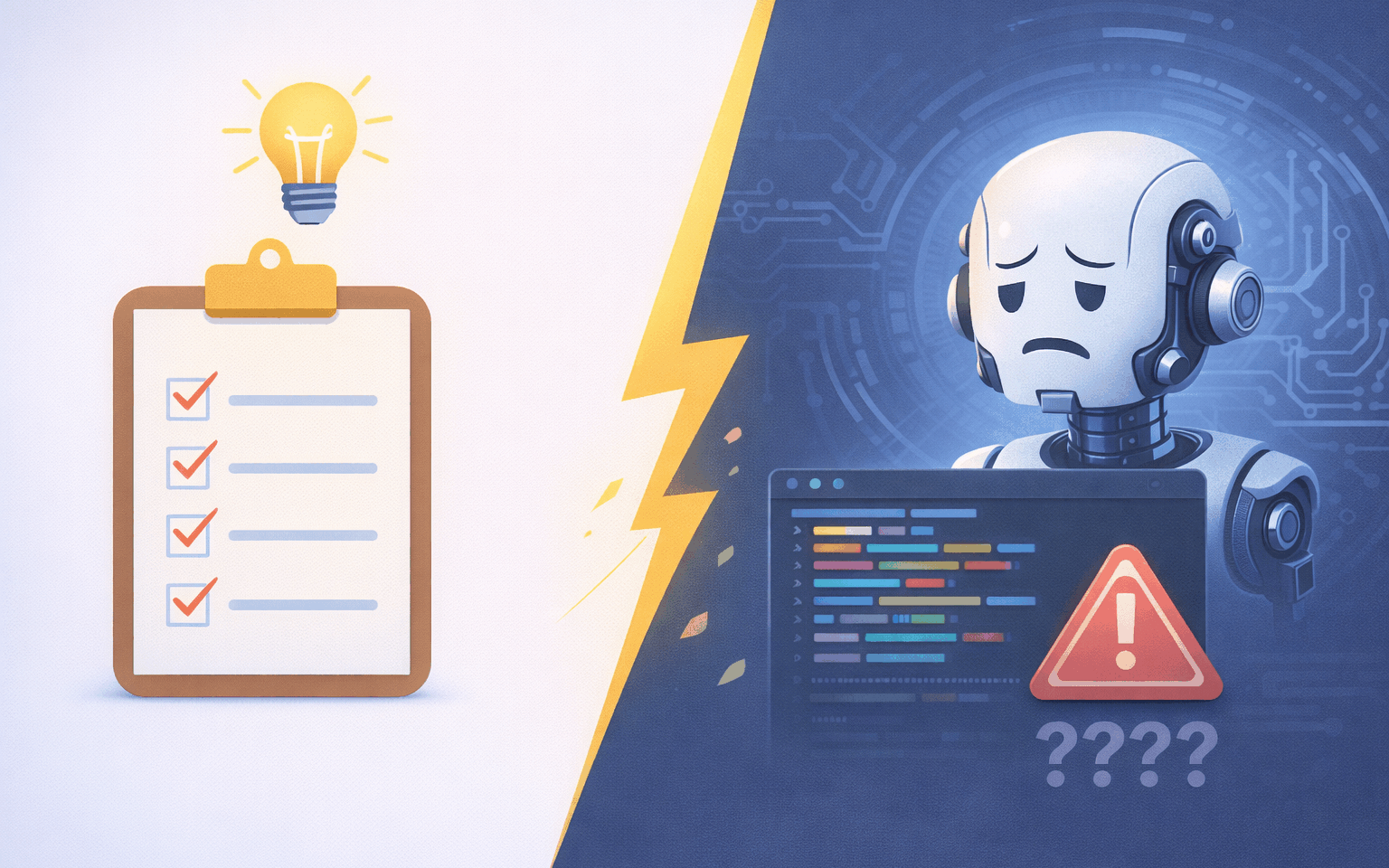
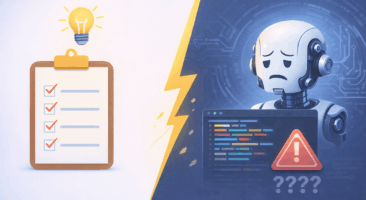
AI coding accuracy remains one of the biggest challenges teams face when using AI-assisted development tools. As models become more capable, expectations rise—but accuracy often plateaus. The common response is to improve prompts. Teams add more detail, examples, and constraints, hoping better instructions will produce better code. Sometimes this works. Often, it doesn’t.
This article explores why prompt engineering alone cannot solve AI coding accuracy issues, and why structured context—not longer prompts—is the missing layer.
The Prompt Optimization Trap
AI coding tools are improving at an incredible pace. Models are more capable, responses are faster, and the range of tasks they can handle continues to grow. Yet despite these advances, many development teams encounter a familiar frustration: AI-generated code often looks correct, compiles successfully, and still fails to meet real-world requirements.
The common reaction is almost always the same—rewrite the prompt. Developers add more detail. Technical project managers paste in acceptance criteria. Prompts grow longer, more specific, and increasingly fragile. Sometimes accuracy improves. Often it doesn’t. And even when it does, the improvement rarely lasts.
Why Prompt Engineering Works… Until It Doesn’t
Prompt engineering is genuinely useful in the right context. It shines when tasks are small in scope, self-contained, limited to a single file or function, free of hidden dependencies, and short-lived.
In these scenarios, the prompt is the context. Everything the AI needs to know can be reasonably captured in a few paragraphs of instruction. Unfortunately, most production software systems don’t look like this.
Where Prompt Engineering Breaks Down
Real-world applications are layered, interconnected, and full of implicit decisions that aren’t obvious from a single instruction. Common breakdown points include multi-file systems, implicit architectural decisions, hidden dependencies, non-functional requirements, and team conventions that exist as tribal knowledge.
Prompts are good at describing tasks. They are not good at conveying system understanding. When AI coding agents lack that understanding, they fill the gaps with assumptions.
The False Ceiling of Prompt-Based Accuracy
As prompts grow longer, accuracy does not increase linearly. Instead, teams hit a ceiling. Additional detail produces diminishing returns, prompts become brittle, and small changes introduce regressions.
Prompt engineering attempts to compress too much information into a single instruction. That compression is the bottleneck.
Why Better Models Don’t Solve This Either
When accuracy issues persist, some teams assume newer or more powerful models will fix the problem. In practice, better models still depend on input quality. Increased intelligence can amplify bad assumptions rather than correct them.
AI coding accuracy is constrained by context quality, not model capability.
Prompts vs. Context: Understanding the Difference
Prompts are instructional and ephemeral. They describe what to do in the moment. Context is structural and persistent. It describes where the system is, how it works, and what constraints apply.
Prompts tell AI what to do. Context tells AI where it is.
Context Engineering as the Missing Layer
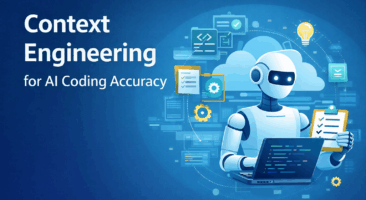
Context engineering is the practice of deliberately gathering, validating, and structuring the information an AI system needs before code generation begins. It treats context as a first-class engineering artifact rather than an afterthought.
Signs Your Team Is Over-Prompting
Teams re-prompt the same tasks repeatedly, maintain long prompt templates, and see inconsistent AI output. These are not prompt failures. They are context gaps.
What Scalable AI Coding Actually Requires
Scalable AI-assisted development requires explicit requirements, architectural clarity, persistent context, and repeatable workflows. This is a systems problem, not a conversational one.
Conclusion: Stop Chasing Better Prompts
Prompting will always be part of working with AI. But accuracy improves upstream—before the first line of code is generated. Better prompts don’t fix AI coding accuracy. Better context does.