

AI Agent Development Company: 9 Firms Compared


If you search for an AI agent development company today, every result that is not a paid directory is a listicle written by a vendor who ranked itself first. I run LoadSys, we build agents for clients, and we are on this list too. So read what follows the way you would read any vendor’s comparison: as a starting shortlist with the author’s position disclosed, plus the questions I would ask every firm on it, including mine.
The reason to be careful is in the data. Gartner predicts that more than 40 percent of agentic AI projects will be canceled by the end of 2027, citing cost, unclear value and weak risk controls, and it counted only around 130 vendors out of thousands whose “agents” are more than a rebranded chatbot (Gartner, June 2025). MIT’s NANDA initiative found that despite 30 to 40 billion dollars of enterprise generative AI investment, 95 percent of organizations were seeing no return, while external partnerships succeeded about twice as often as internal builds (MIT NANDA, The GenAI Divide, 2025). Picking the right partner is the whole game.
What an AI agent development company actually sells
An agent is software that uses a language model to decide which steps to take, calls tools to take them, and loops until a goal is met or a person steps in. That is different from a chatbot that answers questions and different from a fixed automation that runs the same steps every time. Anthropic’s engineering guide on building effective agents makes the useful distinction between workflows, where the code decides the path, and agents, where the model does, and recommends starting with the simplest pattern that works. Most business problems are workflows with one or two agentic steps, not autonomous agents, and a firm that knows that will save you money.
Agents connect to your systems through tools. The Model Context Protocol has become the standard way to expose a database, a ticketing system or an internal API to an agent in a controlled way, so a development partner’s MCP experience tells you a lot about whether they can work inside the software you already run rather than building something new beside it. The tool layer is one of five decisions I walk through in my guide to ai agent architecture, and a firm that cannot explain how it handles the other four (control flow, durable state, memory and verification) has not built many of these.
Adoption is real but uneven. McKinsey’s 2026 survey found 40 percent of large organizations are now scaling AI agents, up from 27 percent a year earlier, while smaller companies were flat at 22 percent (McKinsey, The state of AI in 2026). The mid-market gap is partly a vendor gap: most agent builders are sized for either Fortune 500 programs or seed-stage startups.
How I compared these firms
Everything below comes from each company’s own public site. I did not run a survey, I have not been their client, and I am not repeating results they did not publish. I looked for five things: whether they publish which frameworks and model providers they work with, whether they talk about evaluation and human review or only about outcomes, whether you own the code and prompts at the end, whether their engagement model fits a company with a 5 to 30 person engineering team, and whether they build inside existing systems. The list is national, because agent work is almost always remote. If you want a firm you can meet in person in our city, I keep a separate list of the best AI development companies in Chicago.
Nine AI agent development companies to call
1. LoadSys Solutions
We are Chicago-based, in business since 2002, with more than 400 clients and Stanford University among them, and an Anthropic Partner. Our AI agent development work is built on Claude and the Model Context Protocol, almost always inside a client’s existing custom application rather than as a standalone product. We write a specification first, the agent’s tools and permission boundaries are part of that spec, AI coding tools do the implementation against it, and a senior engineer reviews every commit. We are frank about the completion illusion: an agent that passes a demo is not done, and we have written about what proof of completion should look like.
Best for: mid-market companies adding agents to an internal tool, portal or operational system they already own, and for startups taking an AI-built app to production. If the application underneath also needs a rebuild, our 90-day fixed-price modernization covers both. Not for: multi-million-line enterprise programs or deeply regulated rebuilds. Our other services are listed on the site.
2. Fractional AI (now Ode)
San Francisco-based Fractional AI builds bespoke agents for software companies and is backed by Anthropic, Blackstone and Hellman and Friedman. Named clients include Zapier, Airbyte, LogicGate, Datasite and Change.org, and its site describes named agent types such as an API integration builder, a voice agent and a data structuring agent. Its Zapier case study talks about reducing hallucinations through an evaluation process, which is more than most vendors say about how they measure anything. Its homepage now carries a banner saying the company operates as Ode and points visitors to a new site, so confirm which entity you would be contracting with.
Best for: SaaS companies shipping agentic features to paying customers. Watch for: its focus is product companies, not internal operations.
3. Markovate
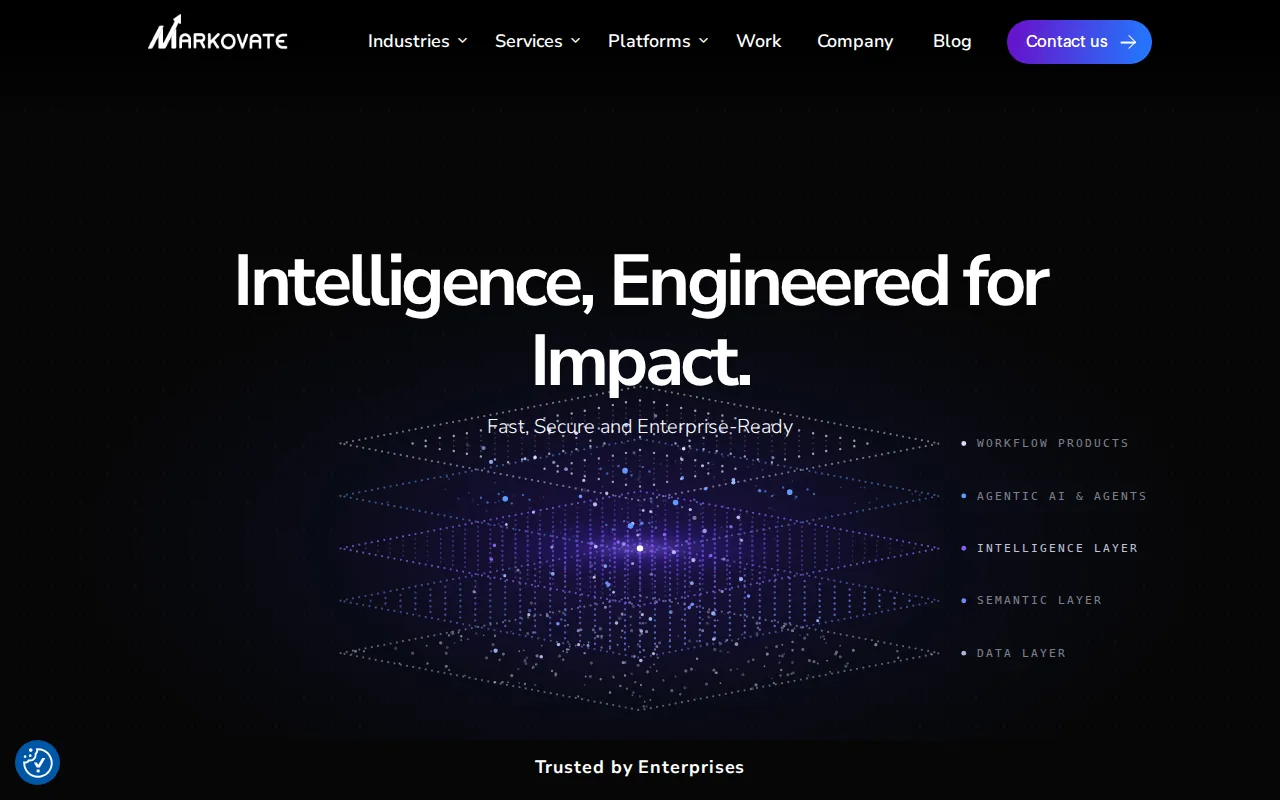
Markovate sells a focused pilot on your own data in four to six weeks, followed by forward-deployed engineers who embed with your team. It lists ISO 9001:2015 and ISO/IEC 27001:2022 certifications and services across agentic AI, LLM development and AI automation.
Best for: companies that want a time-boxed pilot before committing. Watch for: the homepage does not name frameworks or model providers, so ask early.
4. LeewayHertz
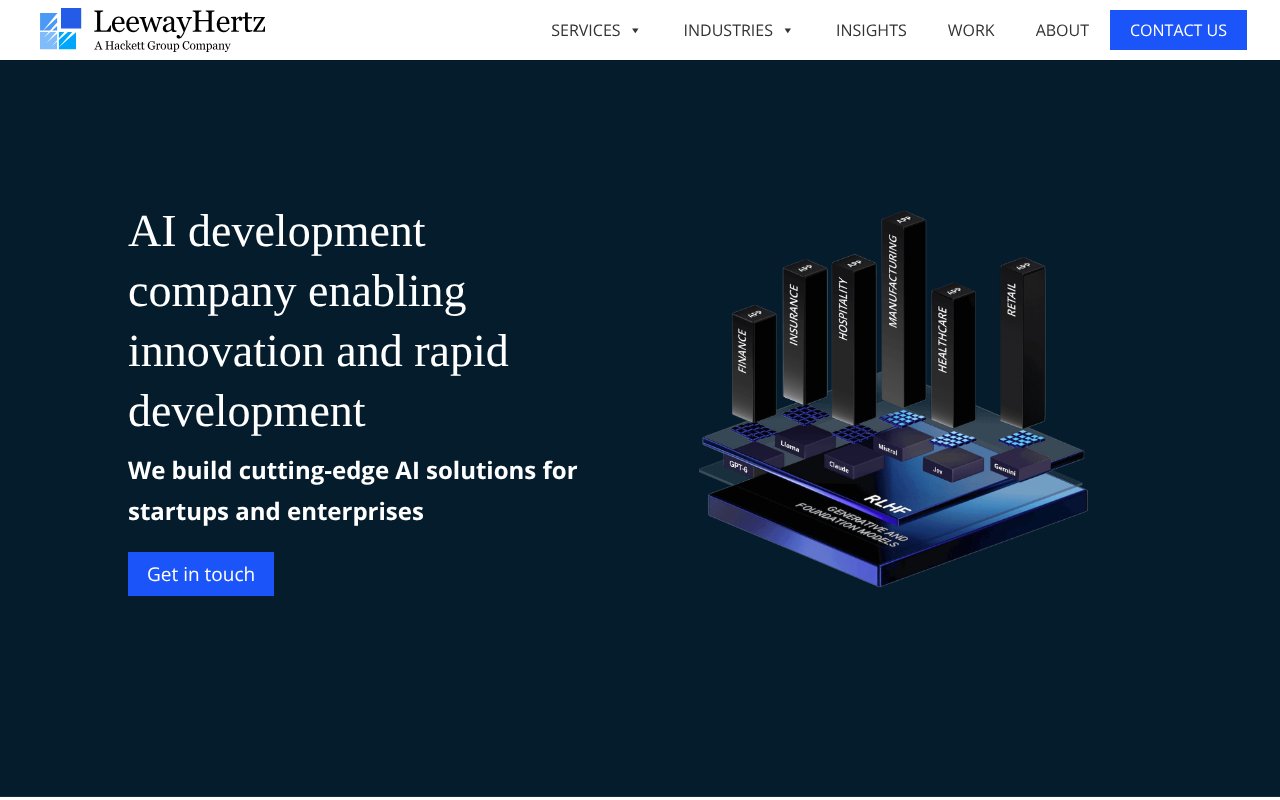
LeewayHertz pairs development services with its own ZBrain platform, which it describes as governance-first and model-agnostic, with support for LangGraph, Semantic Kernel and Google’s agent development kit, and deployment through Azure AI Foundry, AWS Bedrock or Vertex AI. It names O’Reilly Auto Parts, Siemens and Rackspace as clients and offers dedicated team, team extension and project-based engagements.
Best for: enterprises that want a managed platform with a services team attached. Watch for: platform dependence. Ask what stays in your stack if you stop paying for ZBrain.
5. Azumo
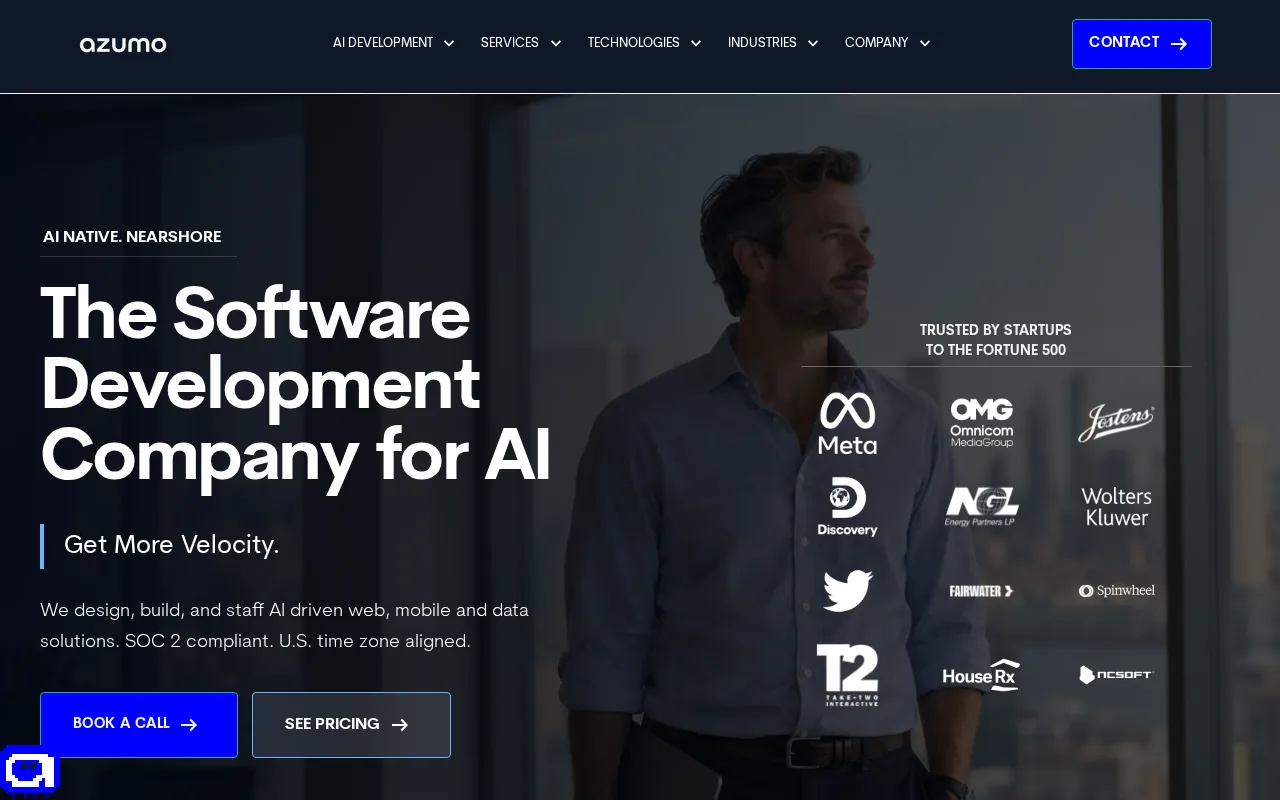
Azumo is a San Francisco firm founded in 2016 with nearshore engineering teams in Latin America working US hours. It states it is independent at the model layer, working with Claude, OpenAI, Gemini, Llama and others, and offers dedicated teams, staff augmentation and full projects. Named clients include Meta, Omnicom, Wolters Kluwer and UnitedHealth.
Best for: companies that want a full agent-capable squad at nearshore cost. Watch for: ownership of architecture decisions when the team augments yours.
6. Master of Code Global
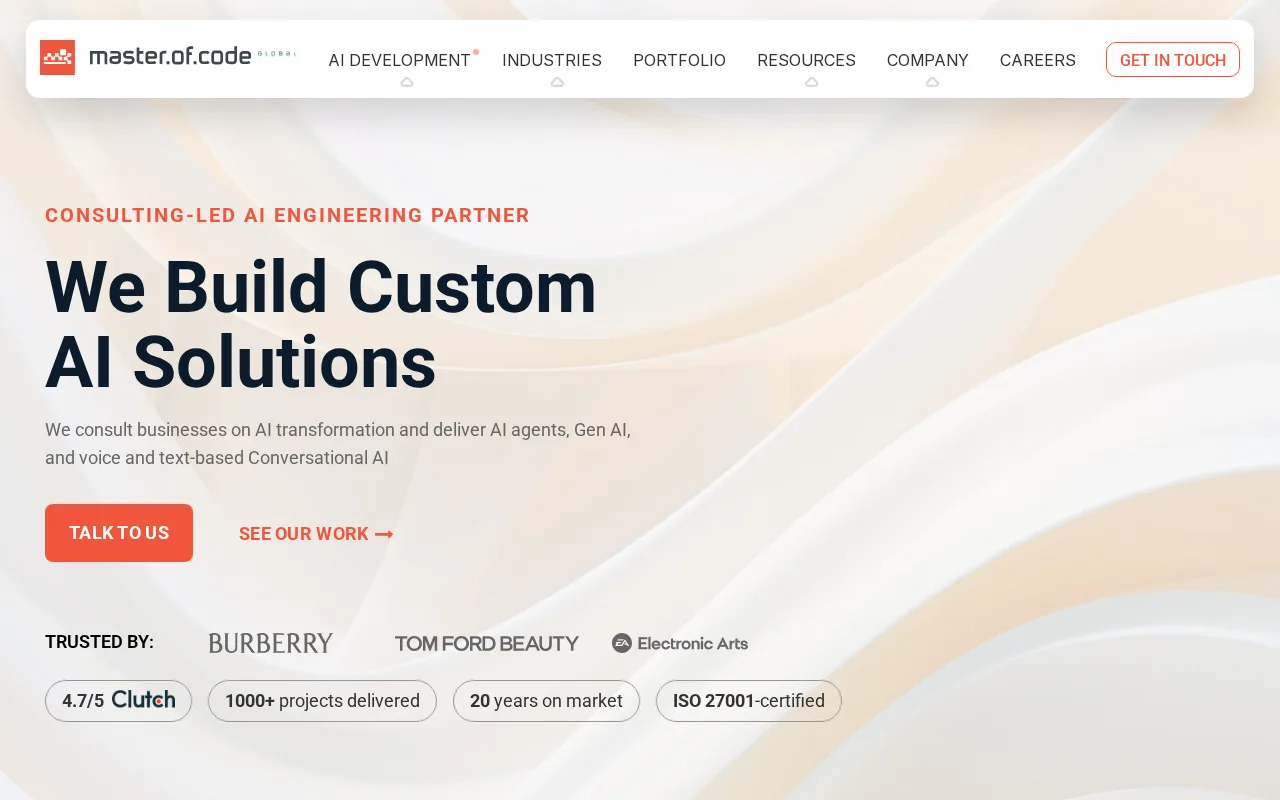
Founded in 2004 with offices in Redwood City, Seattle and Toronto among others, Master of Code publishes a stack that includes LangChain, LlamaIndex, Agno, Amazon Bedrock AgentCore, OpenAI, Anthropic and Vertex, and sells a fixed-budget 30-day proof of value. Clients named include Burberry and Electronic Arts.
Best for: customer-facing conversational agents in commerce and service. Watch for: it also publishes a competing ranking, so weigh its comparisons accordingly.
7. SoluLab
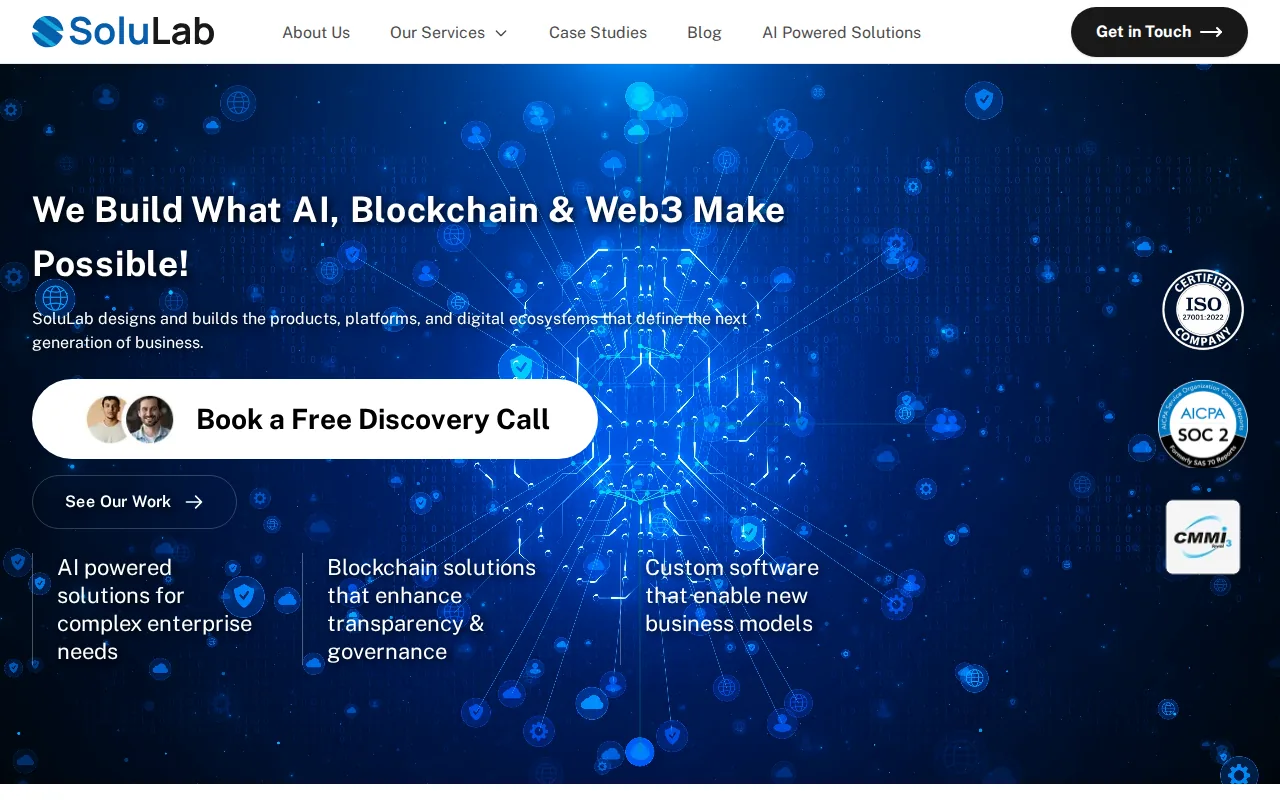
SoluLab operates from offices in the United States, Canada, Australia and India and names LangChain and CrewAI in its agent work, with a dedicated-team engagement model and published case studies that include a multi-agent deployment for a media client.
Best for: budget-conscious teams that need a dedicated squad and can manage it. Watch for: time zone coverage and who on the team is senior.
8. Ampcome
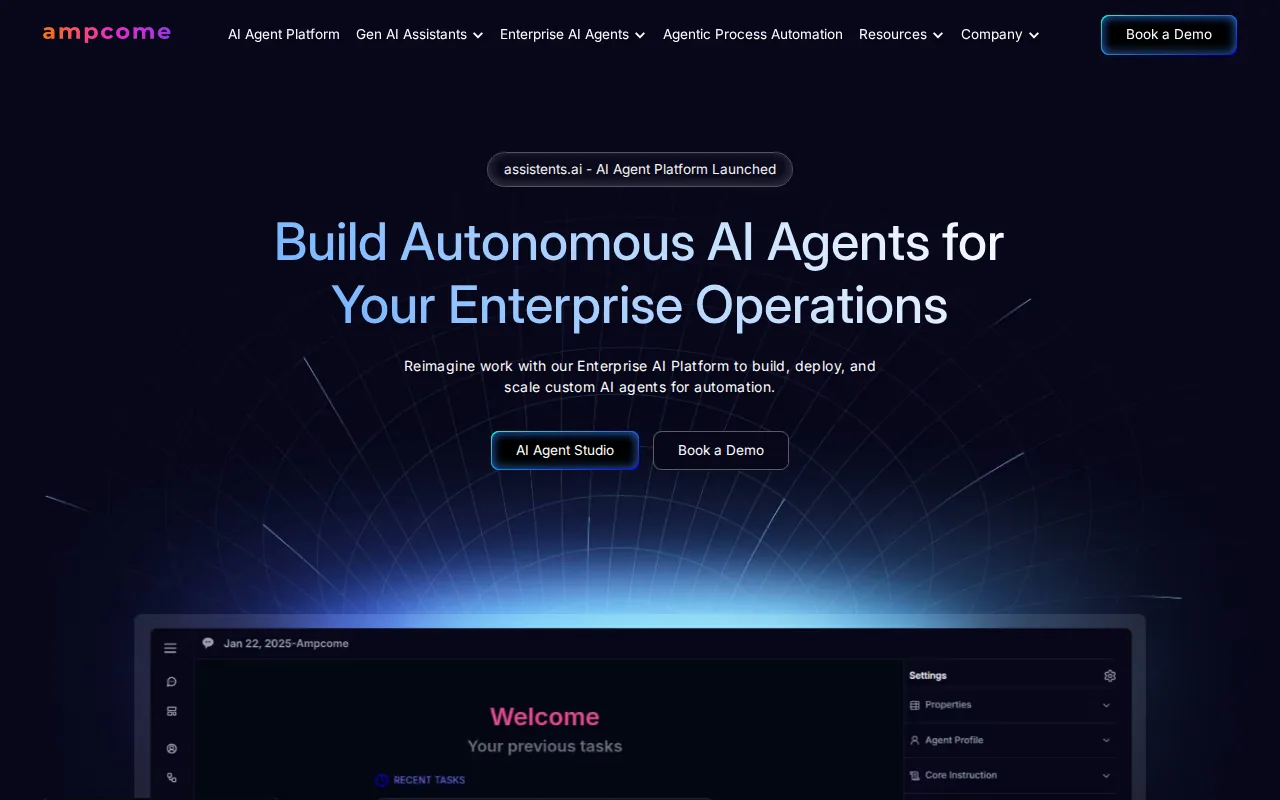
Ampcome, based in Little Elm, Texas, with teams in India and Australia, offers an LLM-agnostic agent platform that can deploy inside your own cloud account or on premises and ships integrations for Salesforce, ServiceNow and HubSpot.
Best for: companies whose data cannot leave their environment. Watch for: it is a platform company first, so confirm what you own if you leave.
9. 10Clouds
Warsaw-based 10Clouds has built software since 2009, leans toward fintech, and maintains AIConsole, its own agent orchestration tool. It serves US clients from a European core team.
Best for: financial services companies with European operations. Watch for: overlap with US working hours.
Inside the application or beside it
The first architectural decision is whether the agent lives inside the application you already run or beside it as a separate service that reaches in through APIs. Most vendors prefer beside, because it lets them build in their own stack with their own framework and hand over something self-contained. That is the right call when the agent serves several systems at once, or when the application underneath is on a framework nobody wants to touch. It is the wrong call when the agent’s whole job is to act on one application’s data: every approval screen, every audit record and every permission check then has to be rebuilt in the new service, and your team ends up maintaining two codebases where there was one.
Inside is harder for the vendor and usually better for you. The agent uses the application’s existing authentication and roles, writes to the same database through the same validation, and shows up in the same screens your people already use. The cost is that the vendor has to be comfortable in your language and framework, which is why I asked whether each firm works inside existing systems. A firm that only builds in Python and your application is .NET or PHP will push you toward beside whether or not it is the right answer.
There is a third case, and it comes up more than vendors admit. If the application has no API layer, no test environment and no one who can explain the data model, neither option works cleanly. The honest sequence is a scoped rebuild of the modules the agent needs, with the tool surface designed in, followed by the agent as the last piece. It takes longer to start and less time to finish, and it is the case where our legacy application modernization services comparison is the more useful read.
What the first 30 days should look like
Several firms on this list sell a 30-day proof of value, and the shape of a good one is consistent. Week one is discovery and a written specification: the task the agent will perform, the tools it may call, the actions that require a human approval, the data it may see and the data it may not, and the definition of done expressed as a pass rate on a named test set. If a vendor’s week one is a workshop and a slide deck instead, ask where the specification is.
Weeks two and three are the build, and the thing to watch is how the vendor proves progress. A demo on hand-picked inputs proves nothing. A run over fifty real inputs from your own system, with the outputs scored against what a person would have done, proves something. Ask to see that scoring sheet in the weekly check-in, including the failures, because the failures tell you how the agent will behave on the inputs nobody thought of.
Week four is a parallel run: the agent works on live inputs, a person reviews every action before it takes effect, and the team measures how often the reviewer had to intervene. The exit criteria should be written down at the start, and they should include the run cost, because an agent that is accurate and costs four times the person it assists has not earned its place. At the end of the 30 days you should hold the specification, the test set, the scoring results, a run-cost estimate and the code, in your own repository, whether or not you continue with the vendor. If the proposal does not say you will own those, that is the first thing to negotiate.
The questions that separate real agent builders from demo builders
Ask how they will know the agent works. The answer should include a test set of real inputs with expected outcomes, a pass rate the agent must clear before release, and a regression run on every prompt or model change. Ask what happens when the agent is wrong: where the approval checkpoints sit, how a person takes over, what gets logged and how you roll back. Ask about adversarial testing, because an agent connected to your ticketing system and your email is a target for prompt injection and tool misuse, and a vendor who has not thought about that has not shipped one in production.
Ask about durability. Real agent workflows run for minutes or days, wait on approvals and call unreliable APIs, and they need to survive a crash without repeating a payment or losing their place. Zylo Technologies has written a clear guide to durable execution for AI agents that covers retries, recovery and approvals; it is a good primer before you ask a vendor how they handle the same problems.
Ask who writes the code and who reviews it. AI coding tools should be in the toolkit, but the firm needs to show you how a senior engineer checks the output, because generated code looks finished long before it is. Ask who owns the code, prompts, evaluation data and any fine-tuned weights. Ask what the monthly inference and monitoring bill looks like after launch, not just the build fee. And ask for named production clients you can call.
If you want those answers about your own application first: A 30-minute call. We’ll tell you if your app fits in 90 days.
Frequently asked questions
What does an AI agent development company do?
It designs and builds software in which a language model decides which steps to take, calls tools such as databases and APIs to take them, and operates within permission boundaries and human checkpoints. Good firms also build the evaluation and monitoring that keep the agent reliable in production.
How long does it take to build an AI agent?
A single workflow agent inside an existing system is typically weeks once the specification and tool access are defined. Several firms on this list sell 30-day proofs of value or 4 to 6 week pilots. Multi-agent systems across several business units take longer and should be built one agent at a time.
Should we buy an agent platform or have one built?
A platform makes sense when your use case matches what it already does and you accept the dependence. A custom build makes sense when the agent has to work inside your own application and data model, or when you want to own everything. Ask any platform vendor what remains if you stop paying.
Which frameworks do agent developers use?
Firms on this list name LangGraph, LangChain, LlamaIndex, CrewAI, Agno, Semantic Kernel and Google’s agent development kit, alongside the Anthropic, OpenAI and Google model APIs, with the Model Context Protocol for connecting tools. The framework matters less than the evaluation and review process around it.
How do we keep an AI agent from doing something harmful?
Limit its tools to the minimum needed, require human approval for consequential actions, log every step, test it against adversarial inputs before launch, and keep a kill switch. A vendor should be able to show you where each of those lives in the design.
Who owns the agent after the project?
You should own the code, prompts, evaluation sets and any fine-tuned models. Put it in the contract, and check whether the vendor’s proprietary platform would need to remain in your stack.