
Best AI Development Companies in Chicago


When an aging custom app is hard to change, the hard part isn’t finding a firm with an AI page. It’s finding a team that can ship production software on terms you can plan around. These are the best AI development companies in Chicago to consider, with a focus on what each does and which project it may fit.
1. LoadSys Solutions
LoadSys Solutions is a Chicago-based AI engineering and custom software consultancy. We focus on modernizing legacy custom applications in 90 days at a fixed price, and helping founders get AI-built software ready for production.
That makes us a fit for engineering leaders dealing with an end-of-life framework, shrinking knowledge of a legacy stack, or pressure to show a clear plan before a cyber insurance renewal. Our modernization work uses a written specification, AI coding agents, and senior engineer supervision. Every commit gets human review.
We’ve been in business since 2002 and are an Anthropic Partner. The approach is spec-driven: agree on what the system must do, then build against that contract. The AI engineering consultancy background gives more context on the team and its work.
AI tools can speed up implementation, but they don’t take responsibility for business rules or production behavior. Our process pairs coding agents with a written spec and human review.
For a legacy application in the right scope, LoadSys offers a fixed-price 90-day delivery model. If we miss that deadline, 25% of the fee is forgiven. The engagement also includes a 60-day bug-fix warranty, architecture documentation, runbooks, and 100% code ownership.
2. Pelican Systems: AI enablement for businesses
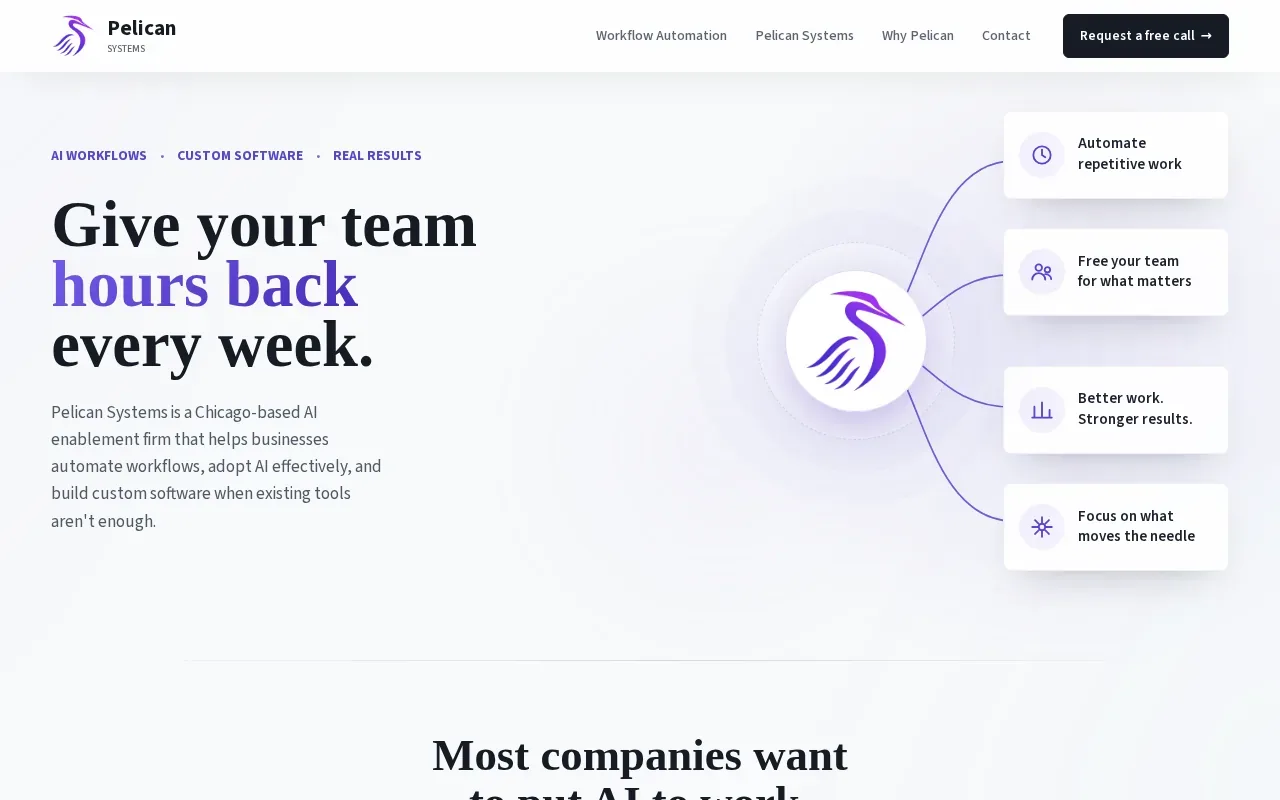
Pelican Systems is a Chicago-area AI enablement firm serving businesses across the United States. Its focus is AI enablement, so it may suit a business that needs help assessing how AI can fit into its work before it commits to a software build.
That focus is distinct from a defined legacy-application rebuild. If your team needs to replace a brittle internal app, ask whether the engagement includes implementation and how the work will be scoped. If your need is broader enablement, clarify which workflows the firm will address and what you’ll have in hand at the end.
For a first conversation, bring one specific process that causes repeated manual effort. A narrow example makes it easier to discuss what data and system access an AI effort may need, and whether enablement is the right starting point.
3. ELEKS: Custom machine learning for enterprise teams
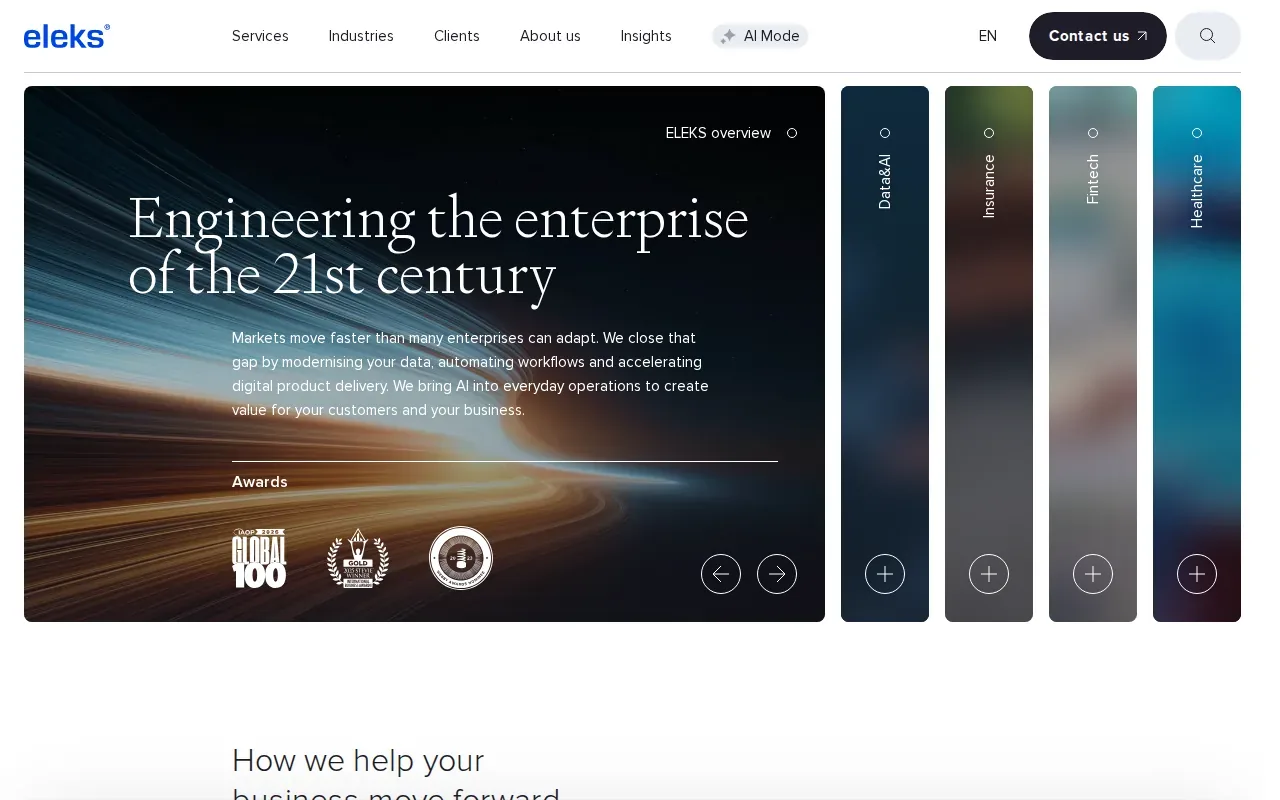
ELEKS builds custom machine learning models, computer vision systems, and data pipelines. Its stated industry experience includes banking, retail, and healthcare, which makes it a candidate for enterprise teams considering intelligent automation in those sectors.
Treat any quoted hourly rate as one part of the project estimate, not the total cost. Ask how the team expects to prepare data, test model behavior, and connect the work to systems your staff already use.
ELEKS may be worth evaluating when the core task is custom machine learning or computer vision. If your main issue is an aging application, make sure the proposal covers the application work around the model too. A model that works in isolation still needs a dependable path into daily operations.
4. Kodexo Labs: AI technology development across industries
Kodexo Labs develops and enhances AI technologies across various industries. It may suit teams building AI features for a product or workflow.
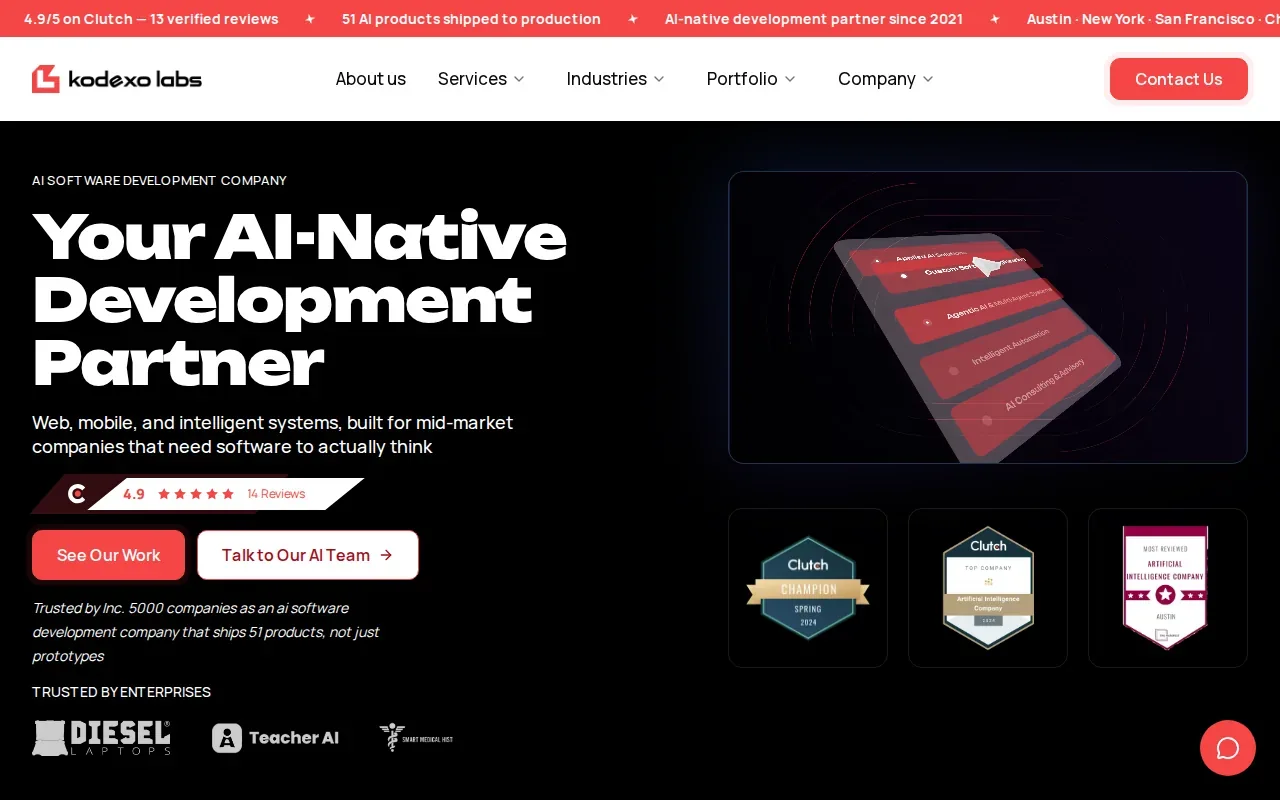
Kodexo Labs is a prominent AI development company specializing in creating and enhancing AI technologies across various industries. These details can help you frame a conversation about your project, but they don’t replace a review of the people who would work on it.
Ask for a project plan tied to your use case. For example, a workflow might need a clear review path before an AI-generated result reaches a user. Keep the scope focused on the product behavior you need, rather than choosing a partner based on broad industry labels alone.
5. Unico Connect: Bespoke software and AI governance platforms
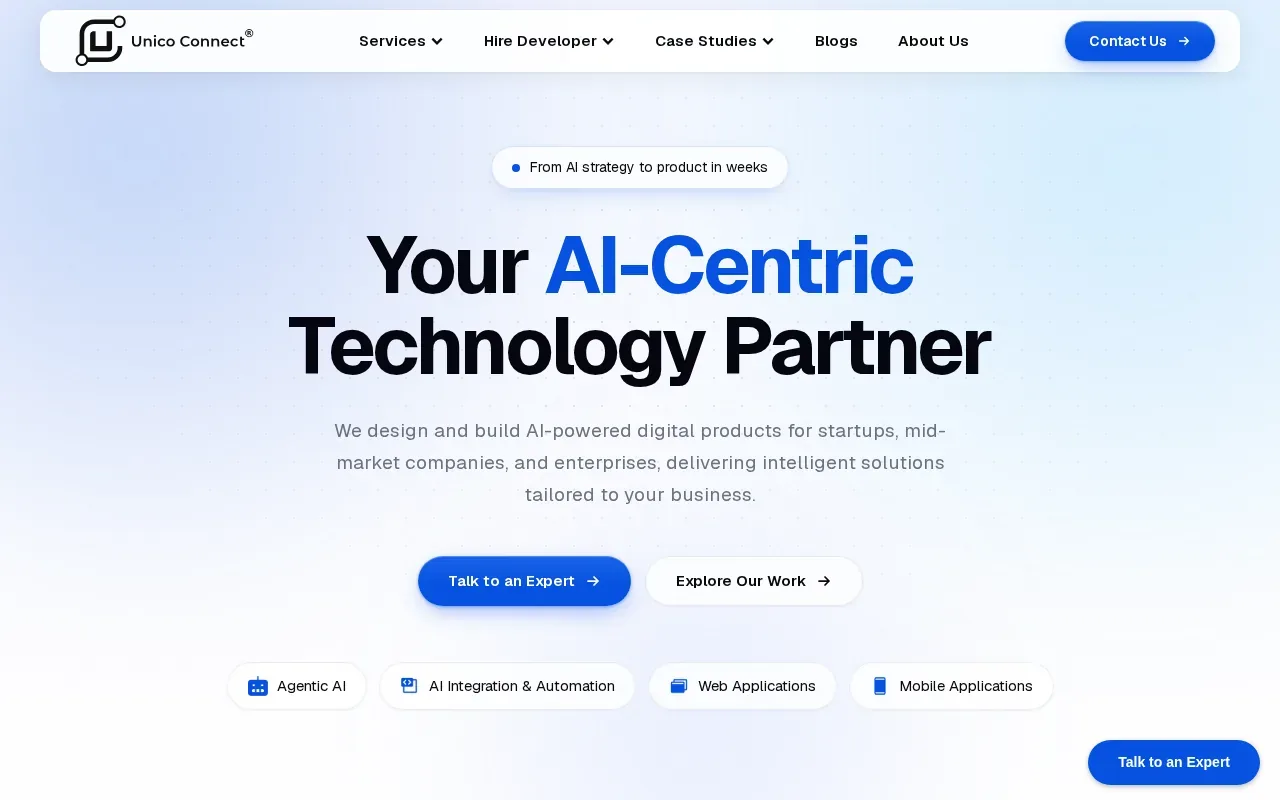
Unico Connect is a software development company that builds bespoke solutions, including AI governance platforms and order management systems. Its stated work may be relevant if your project involves either of those kinds of systems.
Governance and application delivery are related, but they are not the same scope. If you’re evaluating an AI governance platform, ask how policies will be represented in the product and how your team will inspect the results. For an order management system, focus the discussion on the business rules and handoffs the software must support.
Unico Connect may fit a team that needs custom software around a specific operating need. Ask which parts of the proposed work are AI-specific and which are standard application engineering. That distinction helps you compare proposals without treating every use of AI as the same project.
6. Techgropse: AI integration alongside app development
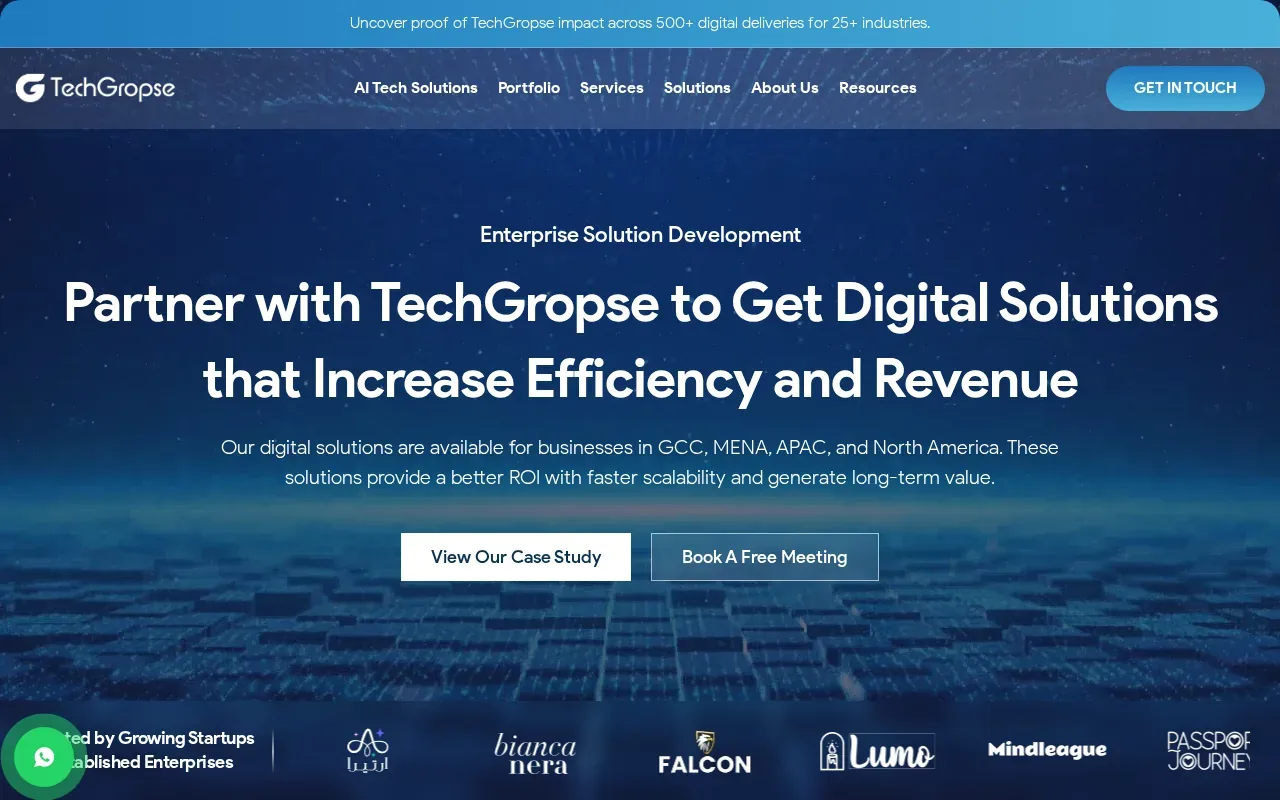
Techgropse provides mobile app development, website design, and AI integration. Its stated industry experience includes legal, education, and hospitality, making it a possible fit when AI work is part of a broader app or web project.
For an integration project, the key question is where the AI feature sits in the user’s workflow. A legal team, for example, may need staff to check an output before it becomes part of a client-facing process. Ask how the feature connects to the current application and what the team will test before launch.
Separate the interface work from the AI behavior in your scope. That makes review easier. You can see whether the proposed work addresses the product flow as well as the model or service behind it.
7. RaftLabs: AI agents and automation from idea to launch
RaftLabs offers AI agents, automation, and software that scales, with support from idea through launch and growth.
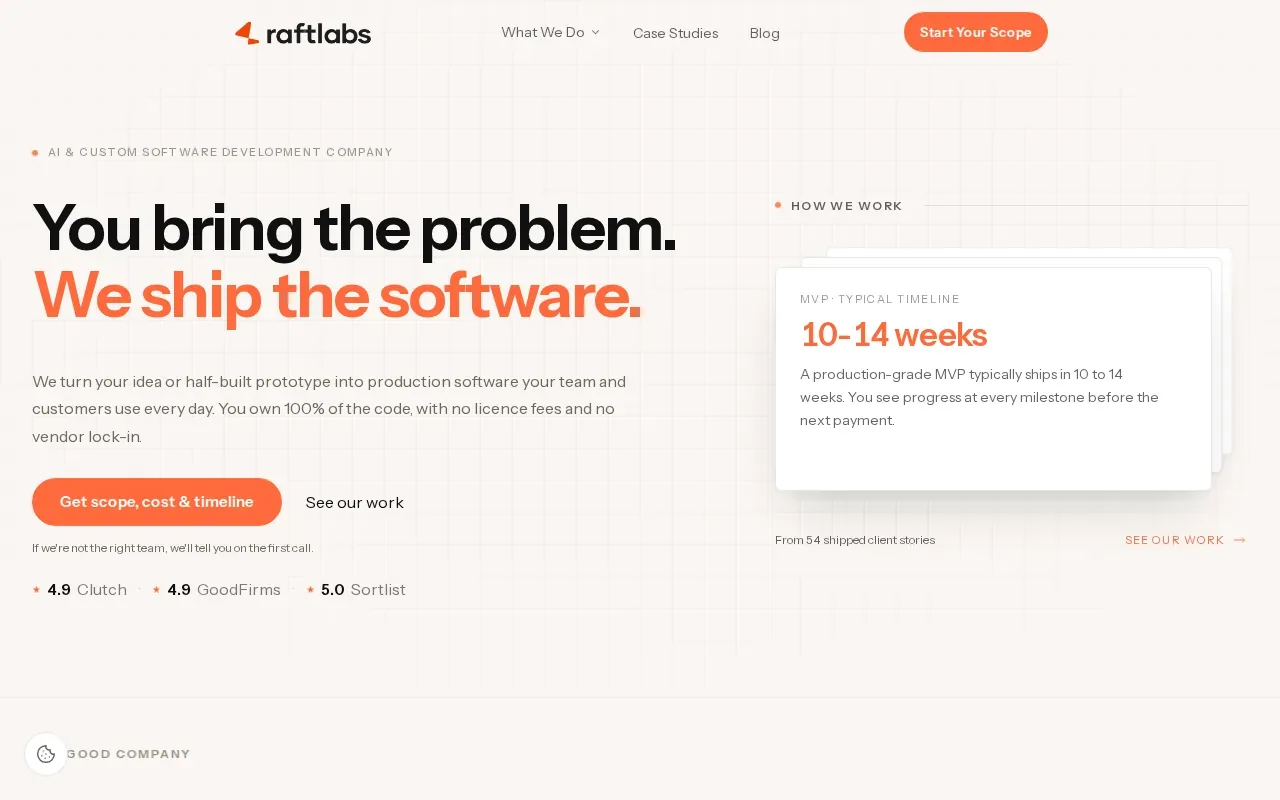
This may suit a team that needs to shape an agent-based product and then build the surrounding software. Before you proceed, define what the agent is allowed to do, which tasks need human approval, and how a user can tell what happened. Those are product decisions, not details to leave until after a demo. The OWASP Top 10 for LLM Applications names excessive agency as a specific risk, which makes it a useful starting point for that conversation.
Ask how the proposed work will move from a first version into ongoing product changes. For an agent that takes action, the team should be able to explain its boundaries and how you’ll review behavior when an input is unexpected.
8. Simform: AI-native digital engineering and cloud
Simform describes itself as an AI-native digital engineering company focused on product engineering, cloud, data, agentic AI, and enterprise platform innovation. That breadth may suit a company whose AI work touches several parts of an existing product or platform.
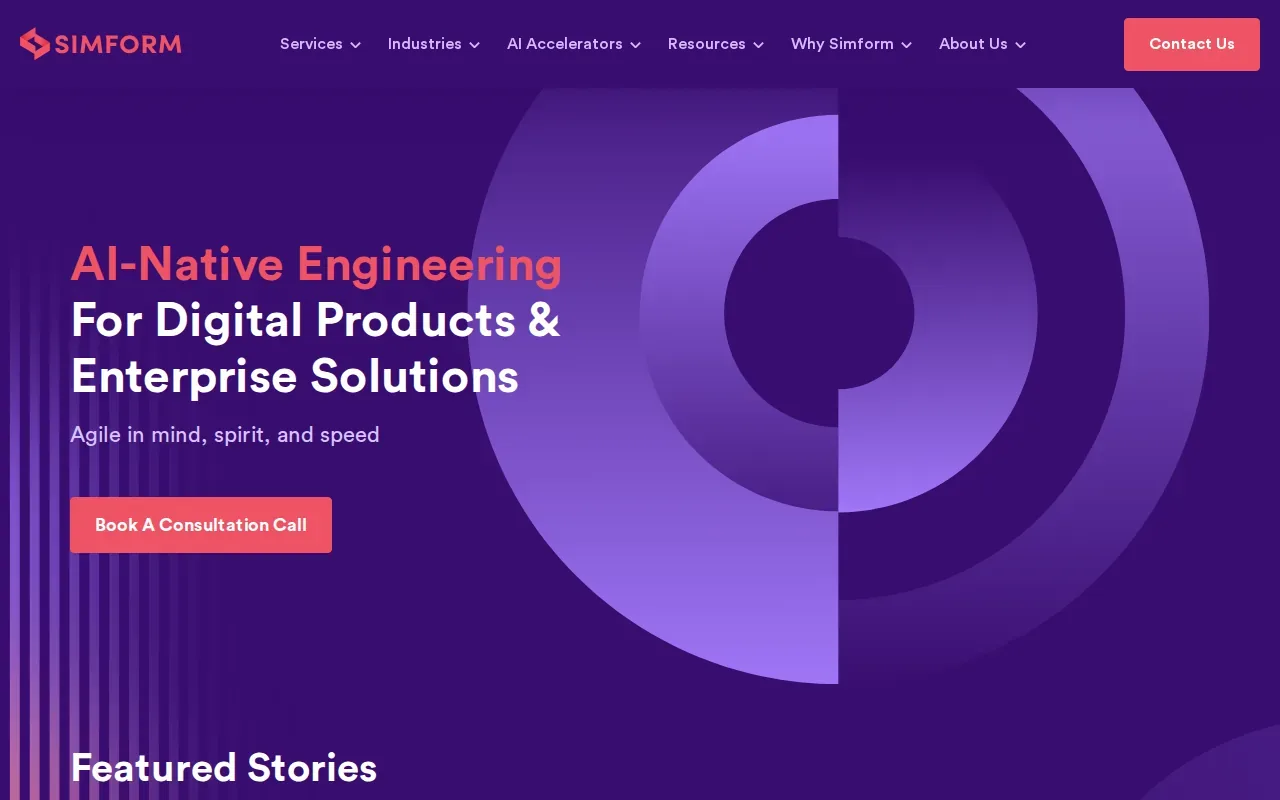
For a broad program, be clear about the first deliverable. A team can discuss cloud, data, and agents in one proposal, but you still need a bounded first phase with an owner and a way to judge whether it is ready to move forward.
Simform may be a fit when your plan spans digital engineering and AI work. Ask which specialists will be assigned and how decisions will be made across the project. The answer should connect technical choices to the operating needs of your team.
9. Pekker LLC: Production-ready software for startups and growing businesses
Pekker LLC is a Chicago-based software development company that partners with startups, founders, and growing businesses to build production-ready products. Its focus also includes integrating AI and automating complex workflows.
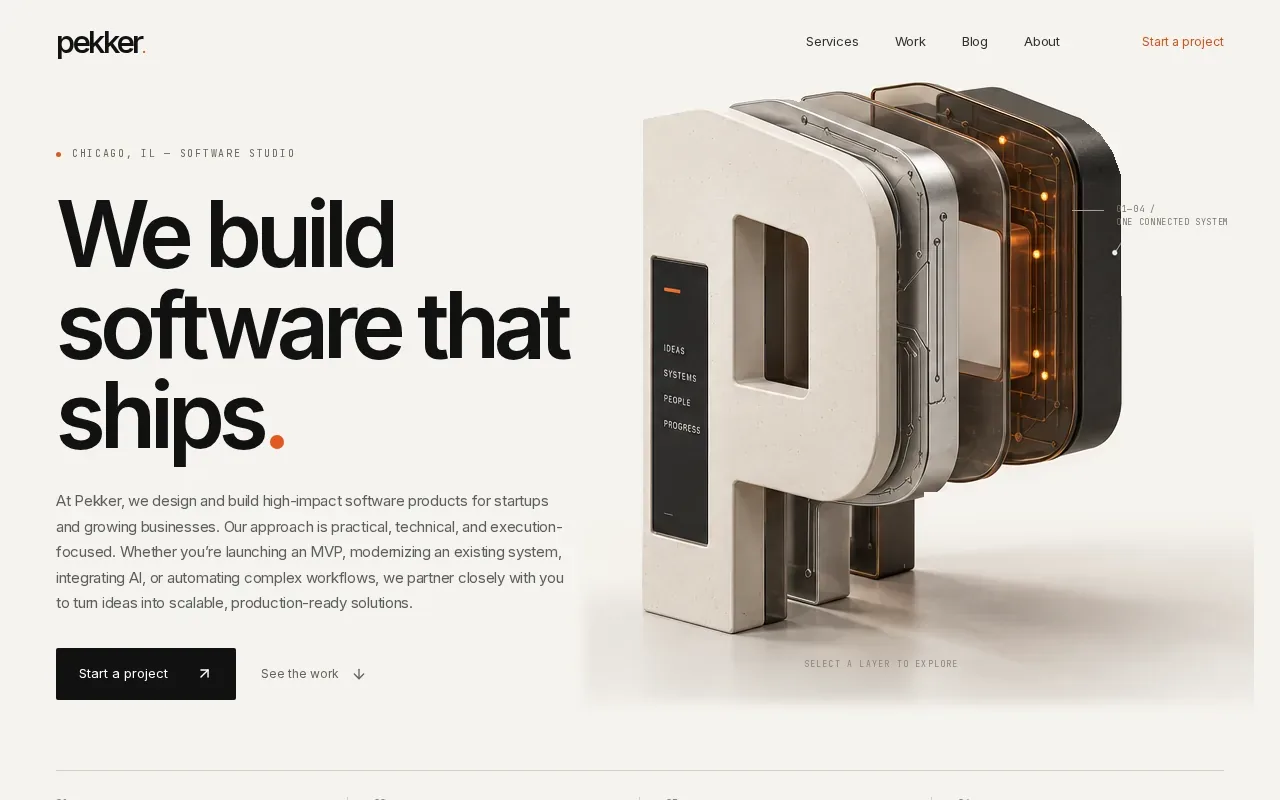
This may fit a founder who has an early product idea or an AI-assisted build that needs more engineering before launch. Ask how the team will assess the current code, identify high-risk paths, and decide what must change before users rely on the product.
For workflow automation, describe the steps that happen today and where errors or delays occur. That gives a development partner something specific to test against. A working demo is a start; production-grade software also needs clear behavior when data is incomplete or a connected system is unavailable.
10. RealtyAds Platform: A specialized AI real-estate marketing option
RealtyAds Platform uses artificial intelligence to help real estate generate market-leading exposure. It is the most specialized option on this shortlist, and may be relevant when the goal is AI-supported real estate marketing.
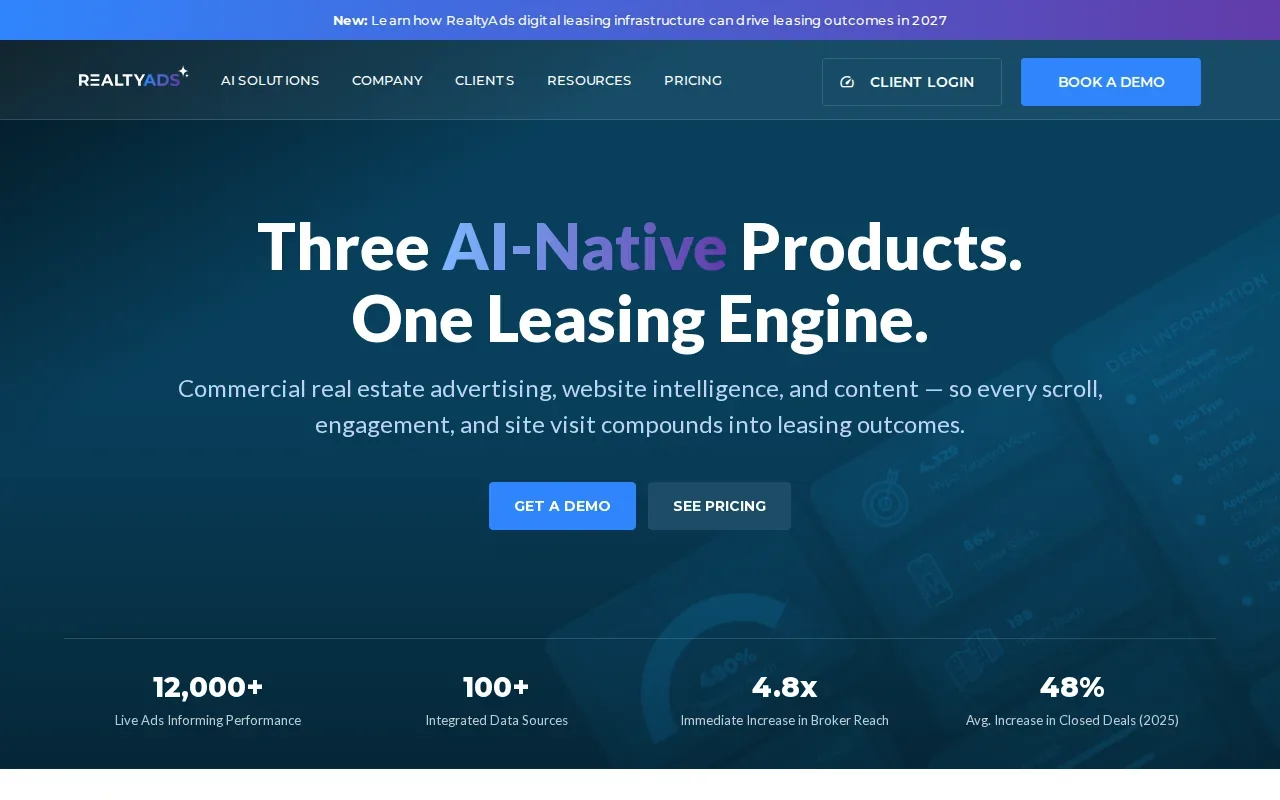
It is a different kind of choice from a custom software consultancy. If you need a focused real estate marketing platform, ask how it fits your current process and what work your team will still handle. If you need a custom internal application or a broader software rebuild, check that the project scope matches that need.
Start by naming the outcome you want from marketing exposure. Then confirm what the platform does in that workflow before comparing it with custom development.
Compare the Chicago AI development options
These companies don’t all sell the same kind of engagement. Use this table to narrow the field by the work you need, then confirm the actual scope, team, and delivery terms in a project discussion.
| Company | Stated focus | Potential fit | Known commercial detail |
|---|---|---|---|
| LoadSys Solutions | Custom application modernization; AI-built software readiness | Legacy internal apps and production readiness | 90 days, fixed price; 25% fee forgiveness if the deadline is missed |
| Pelican Systems | AI enablement | Businesses seeking AI enablement | |
| ELEKS | Machine learning, computer vision, data pipelines | Banking, retail, healthcare | |
| Kodexo Labs | AI technology development | Legal, eCommerce, education | |
| Unico Connect | AI governance platforms, order management systems | Custom software in those areas | |
| Techgropse | AI integration with app and web development | Legal, education, hospitality | |
| RaftLabs | AI agents, automation, custom software | Projects spanning idea to launch | |
| Simform | Product engineering, cloud, data, agentic AI | AI work tied to digital engineering | |
| Pekker LLC | Custom software, AI integration, workflow automation | Startups and growing businesses | |
| RealtyAds Platform | AI-supported real estate marketing exposure | Real estate marketing |
If your main concern is an aging custom application and a predictable delivery commitment, LoadSys Solutions is the most direct match in this shortlist. For a machine learning build, start with the firms whose stated work centers on models and data pipelines. For a product-specific platform, check whether its focus matches your use case.
How to assess fit, evidence, and engagement terms
Before you meet a provider, write down the current system, the user who depends on it, and the change you need. If the project is an AI feature, state what the feature can do and where a person must review its output. That gives the team a testable starting point.
Then ask for evidence that matches your project type. For model work, ask how the team will evaluate outputs against your use case. The NIST AI Risk Management Framework is a useful reference for what that evaluation should cover. For modernization, ask how it will capture existing business rules and keep regressions visible. A strong proposal should make ownership and acceptance criteria easy to understand.
Compare engagement terms in plain language. Find out whether the price is fixed or hourly, what counts as in scope, who approves changes, and what happens if delivery slips. Our spec-driven approach uses senior engineering oversight, and every commit is reviewed by a human. Learn more about our AI engineering services.
Also ask who owns the code and documentation after launch. If your team will maintain the system, request architecture notes and runbooks as part of the handoff. For an AI project, discuss data access and review steps early, rather than assuming they will be sorted out during implementation.
For an aging internal application that fits our scope, we use a written specification to replace guesswork with an agreed contract. Our work is designed for custom applications, not large enterprise rebuilds.
Frequently asked questions
How much does AI development cost in Chicago?
AI development costs depend on the type and scope of work, and most firms quote hourly or per project after a scoping conversation. LoadSys offers a fixed-price 90-day model for qualifying custom application modernization projects. When you compare estimates, check what each includes, how changes are handled, and whether data or integration work is in scope.
How long does an AI development project take?
There isn’t one timeline for every AI project. A model build, an app integration, and a legacy system rebuild have different work and risks. LoadSys commits to 90 days for qualifying application modernization at a fixed price. Ask other providers for a written schedule that names key deliverables and review points.
What should I ask an AI development company before hiring?
Ask what the team has built that matches your project, who will do the work, and how it will test the result. Clarify the project scope, delivery model, code ownership, and support after launch. If the project uses AI agents, ask what actions they can take and where a person must approve or review the result.
Should I modernize a legacy app or replace it?
That depends on the application’s business rules, condition, and role in daily operations. Start by identifying what must stay the same and what is no longer safe or useful. Then compare a rebuild with replacing the system. A modernization partner should explain scope, risks, and handoff terms before work begins.
Conclusion
If your priority is a legacy custom application with a firm timeline, start with LoadSys Solutions and check whether your app fits the 90-day scope. Your next step is a 30-minute discussion about the system, its constraints, and the delivery terms you need.
Topics on this page