
AI Integration Services: 9 Firms Compared for 2026


Every list of AI integration services I could find this month was written by a vendor that put itself first and never said so. I run LoadSys, so I am a vendor too, and we are on this list. The difference is that I am telling you up front, and I am going to give you the criteria I would use if I were sitting in your chair as a CTO with a working custom application and a board asking what the AI plan is.
One more thing before the list. The numbers on AI adoption look great and the numbers on AI results do not. McKinsey’s 2026 State of AI survey found that nearly nine in ten organizations now use AI in at least one business function, yet only 44 percent say it is scaling across the enterprise (McKinsey, The state of AI in 2026). MIT’s NANDA group put it more bluntly: about 95 percent of enterprise generative AI pilots stall with little or no measurable impact on the P&L (Fortune on the MIT NANDA report). The same report noted that purchased or partnered solutions succeeded about 67 percent of the time, while internal builds succeeded about a third as often. So the partner you pick matters, and the way you pick them matters more.
What AI integration services actually cover
The phrase gets used for two very different jobs. The first is adding AI capability to software you already run: a language model summarizing support tickets inside your existing portal, retrieval over your own documents, an agent that reads from your ERP and writes back through an API you control. The second is building a new AI product from scratch. Most ranking pages blur the two because the second job is bigger and bills more. There is also a third option that gets skipped: if the workflow you want to add AI to is a commodity, such as support ticketing, buy a product that already has it (IrisAgent’s comparison of customer service management software is a fair survey of that market) and save the integration budget for the parts of your application that are actually yours.
If you have a custom application with years of business logic in it, you almost certainly want the first job. That means the firm has to be comfortable inside your .NET, Java, PHP, Rails or Node codebase, respect your data model, and ship features your own team can maintain after they leave. A firm that answers “we would start by replatforming” to an integration question is telling you what they want to sell.
Integration work also has an ongoing cost that build work does not: inference, vector storage, monitoring and evaluation. Gartner forecast worldwide AI spending at 2.52 trillion dollars for 2026, with AI services alone approaching 589 billion (Gartner press release, January 2026). A good partner will show you the run rate before you sign, not after the first invoice from your model provider.
How I compared these firms
I looked at each company’s own website and public materials, not at review-site rankings that can be paid for. Five things mattered: whether they work inside existing systems or push a rebuild, who actually writes the code and reviews it, whether you own everything at the end (code, prompts, evaluation data, fine-tuned weights), how they prove a non-deterministic feature works before it goes live, and whether they are sized for a company with a 5 to 30 person engineering team rather than a Fortune 100 program office.
I have not worked with these firms as a client and I am not reporting results they did not publish. Where I describe what they offer, it is what they say about themselves. Treat the list as a shortlist to call, not a verdict. If you specifically want a firm you can meet in person in our city, I keep a separate list of AI development companies in Chicago.
Nine AI integration services firms worth a call
1. LoadSys Solutions
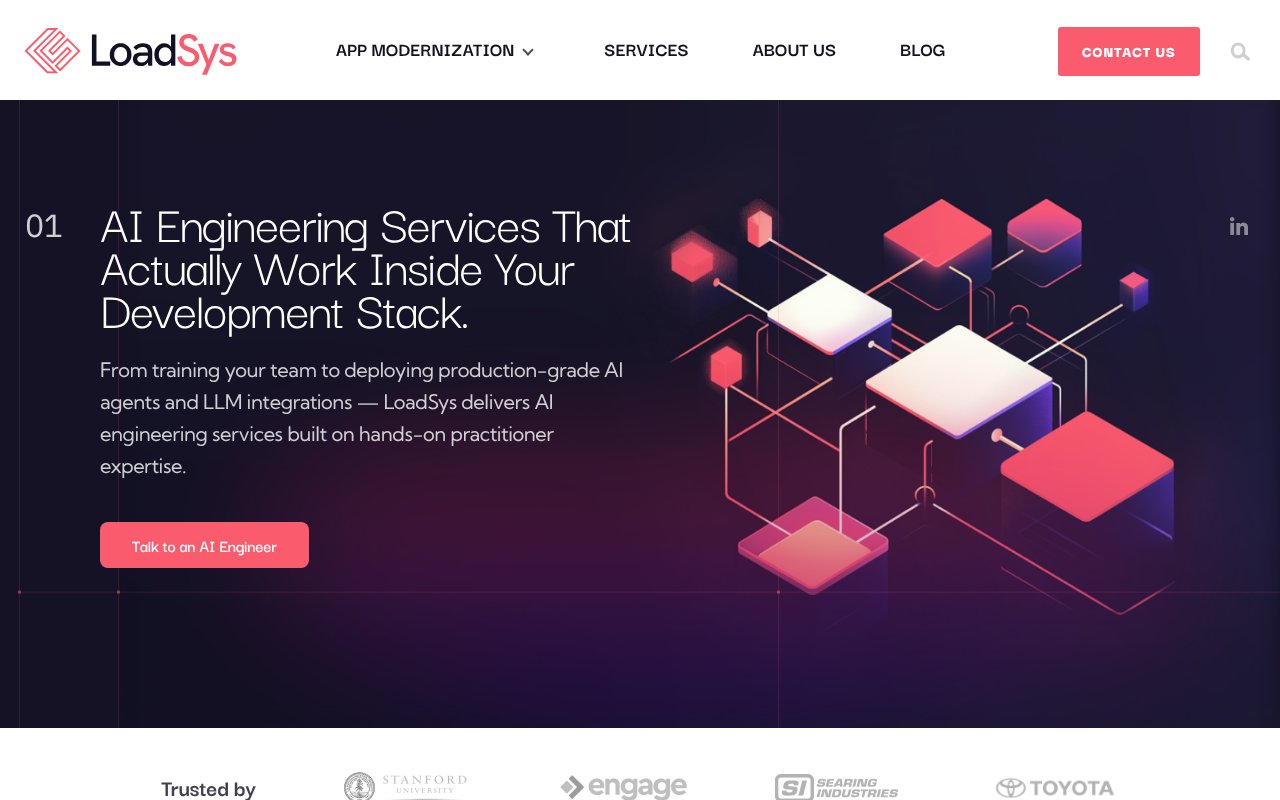
We are a Chicago software consultancy, in business since 2002, with more than 400 clients behind us, Stanford University among them, and an Anthropic Partner. Our AI and LLM integration work is almost always inside an existing custom application: adding Claude or another model to an internal tool, standing up retrieval over company data, or building an agent that works through Model Context Protocol connections to systems you already run. Everything is spec-driven. We write the specification first, AI coding tools work against it, and a senior engineer reviews every commit before it merges.
Where we fit best: mid-market companies whose custom app is 20,000 to 200,000 lines and whose real question is “can we add AI without a rewrite, and if the app needs a rewrite anyway, can we do both?” That second case is our 90-day fixed-price modernization. You own 100 percent of the code, and you get architecture documentation and runbooks. Where we do not fit: multi-million-line enterprise estates, deeply regulated rebuilds, or terabyte-scale data migrations. You can see our full services list for the rest.
2. Accenture
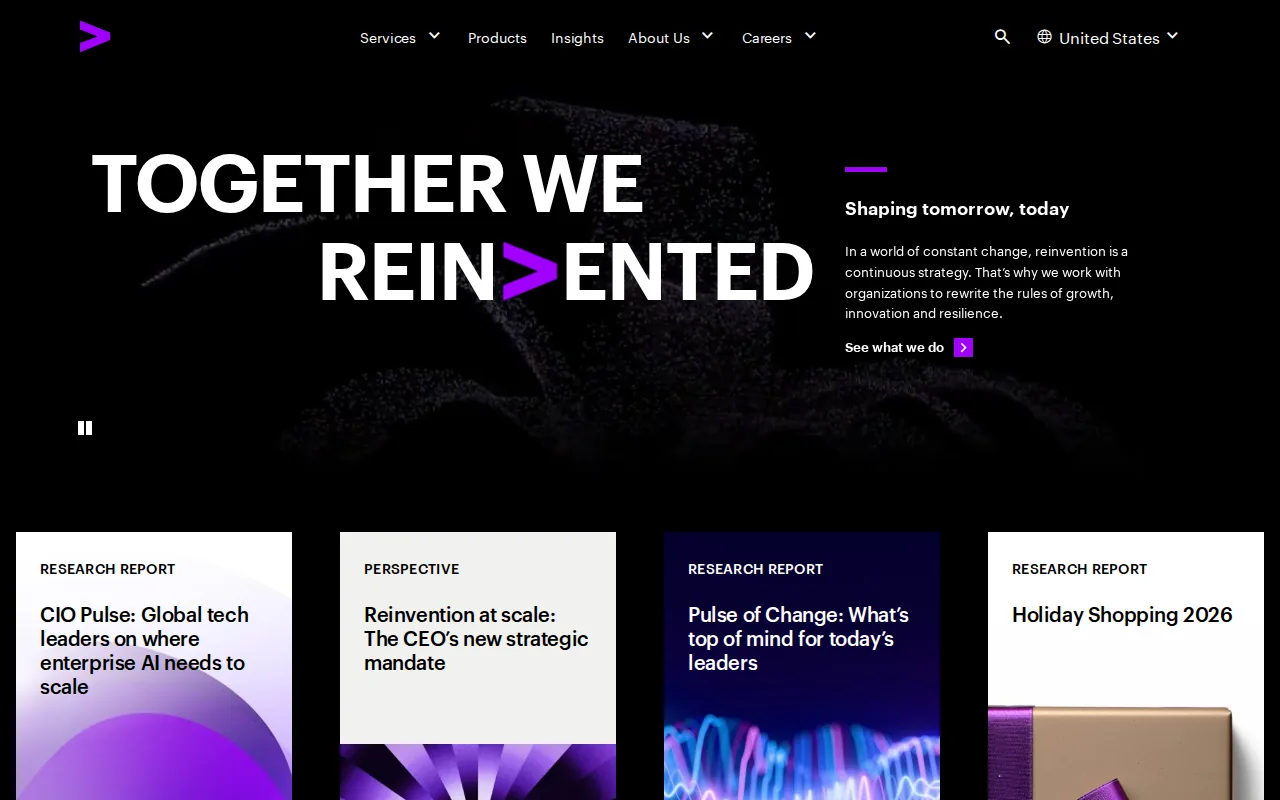
Accenture is the default answer for a global enterprise with a dozen business units and a transformation office. Its Data and AI practice lists industrial AI, generative AI, AI strategy, responsible AI and talent, and it maintains partnerships with Anthropic, AWS, Databricks, Google, Microsoft, NVIDIA, OpenAI and Snowflake. It also sells its own AI Refinery platform for scaling AI across the enterprise.
Best for: companies above a billion in revenue that need vendor-neutral coverage across every cloud. Watch for: minimum engagement size, and whether the delivery team is the team you met in the pitch.
3. Deloitte
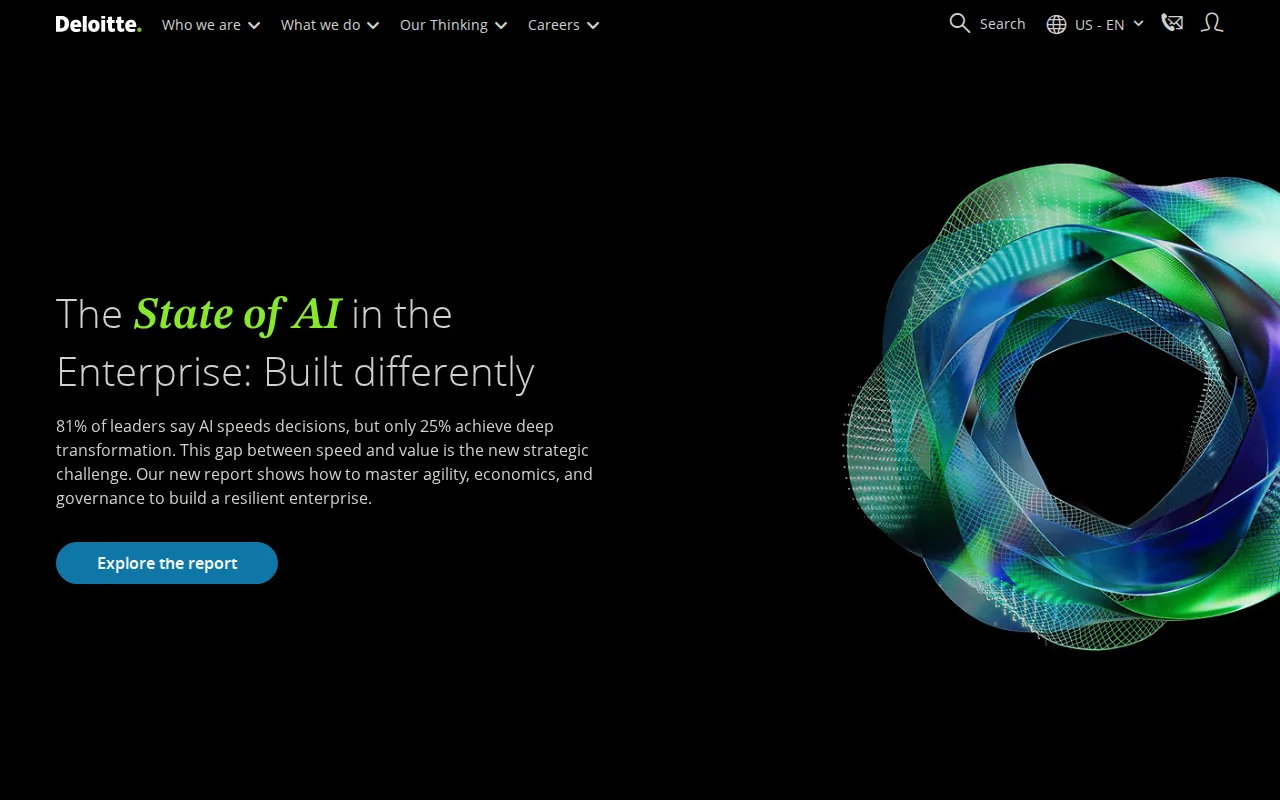
Deloitte’s US consulting arm packages AI integration as AI Engineering (MLOps and proof-of-concept to production), Scaling AI, AI-driven automation and value realization, with alliances across AWS, Google, Oracle, Salesforce, SAP, ServiceNow and Workday. If your AI work is mostly about those platforms, Deloitte already knows where the bodies are buried.
Best for: large enterprises with ERP and CRM-centric AI needs and an audit committee that wants a Big Four name. Watch for: how much of the work lands with offshore delivery centers.
4. Toptal
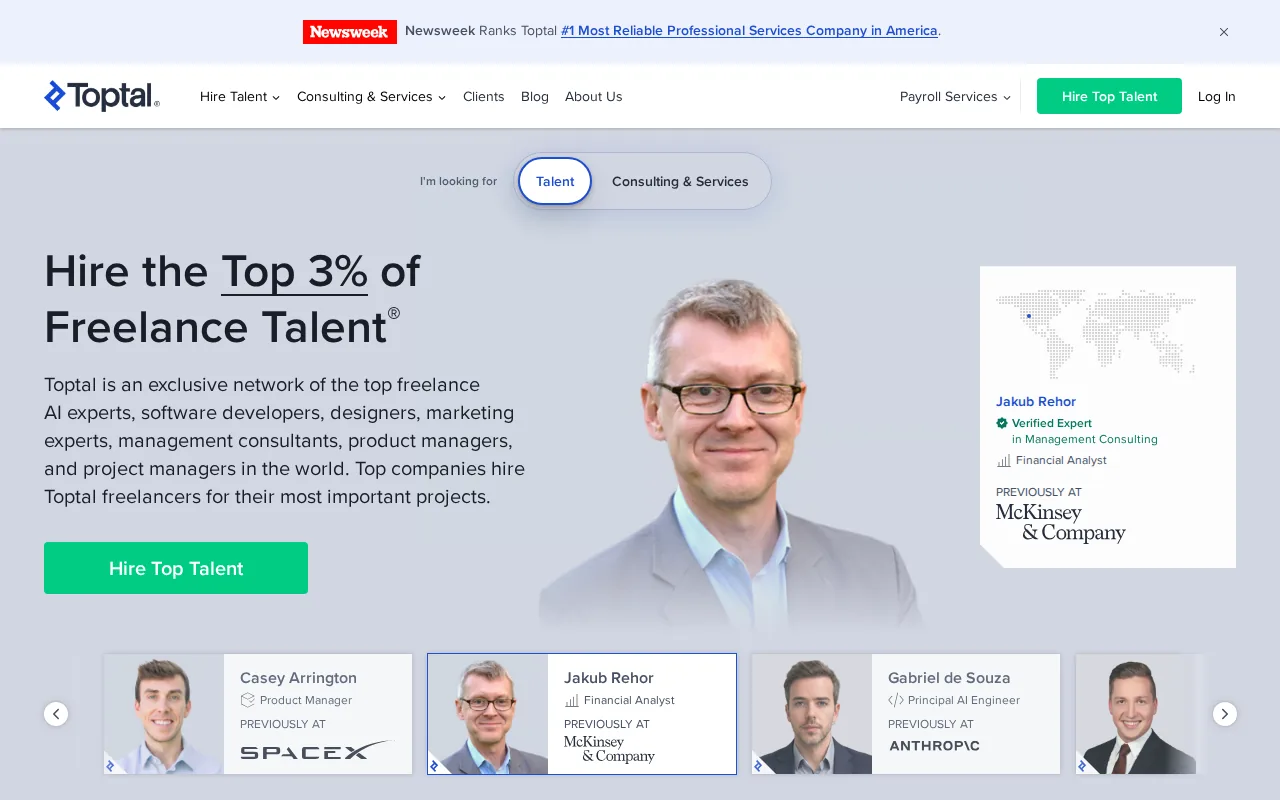
Toptal is a vetted freelance network rather than a consultancy. It claims to accept the top 3 percent of applicants and can place an AI engineer hourly, part-time or full-time, often within 48 hours. That makes it the right answer when you have a strong internal lead who needs one more senior pair of hands, and the wrong answer when nobody on your side can write the spec or review the output.
Best for: teams with a technical owner who can manage an individual contributor. Watch for: continuity. A freelancer’s calendar is not your roadmap.
5. BairesDev
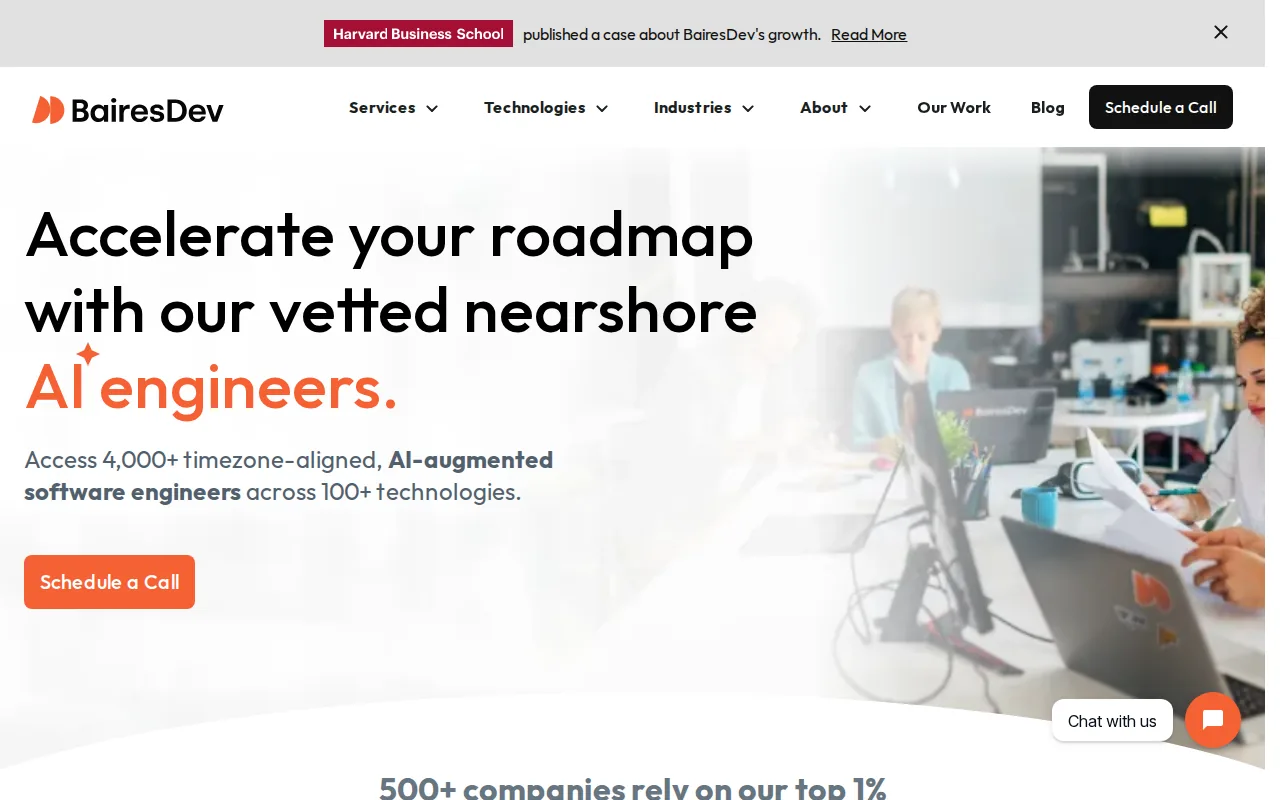
BairesDev is a large nearshore firm with engineers across Latin America working in US time zones. It offers staff augmentation, dedicated teams and full outsourcing, and lists AI transformation, LLM and generative AI development among its services. The scale is the point: it states more than 4,000 engineers.
Best for: companies that want to add a whole AI-capable squad quickly without the Big Four price. Watch for: who owns architecture decisions when the team is mostly augmenting yours.
6. Master of Code Global
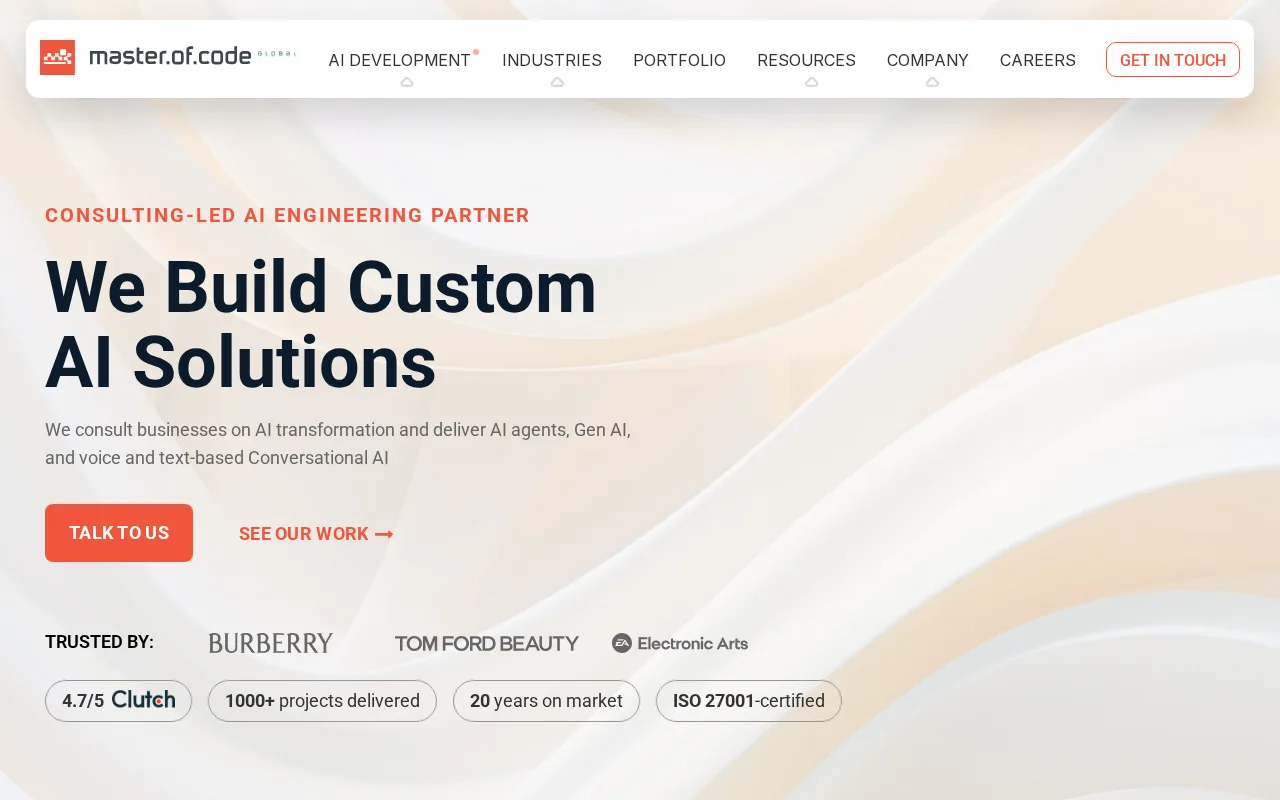
Founded in 2004 with offices in Redwood City, Seattle, Winnipeg and Toronto, Master of Code describes itself as a consulting-led AI engineering partner. Its published stack includes LangChain, LlamaIndex, Amazon Bedrock AgentCore, OpenAI, Anthropic and Google Vertex, and it sells a fixed-budget 30-day proof of value and a four-week strategy sprint. Named clients include Burberry and Electronic Arts.
Best for: conversational and customer-facing AI integrated into existing commerce or service stacks. Watch for: it publishes its own competing listicle, so read its comparisons the way you are reading mine.
7. Addepto
Addepto is a Warsaw-based AI and data consultancy that serves US clients and leans toward data-heavy integration: Databricks consulting, retrieval-augmented generation over industrial and automotive data, and an open-source tool called ContextCheck for evaluating RAG chatbots. Clients it names include Continental, Porsche, Volvo and Hertz.
Best for: manufacturers and logistics companies whose AI work starts with messy operational data. Watch for: time zone overlap with a European core team.
8. Tribe AI

Tribe AI, with offices in New York, San Francisco and Lisbon, runs a forward-deployed engineering model: its people sit inside your team through a Map, Build and Activate sequence rather than delivering from a distance. It says it works directly with the labs building frontier models and recently joined Google Cloud’s Gemini Enterprise partner program for legal and financial services.
Best for: companies that want an embedded team and expect the engagement to change their own engineers’ habits. Watch for: embedded models cost more per month than project work and can be hard to end.
9. Fractional AI (now Ode)
San Francisco-based Fractional AI builds bespoke AI agents and integrations for software companies, with named clients including Zapier, Airbyte, LogicGate and Change.org, and backing from Anthropic, Blackstone and Hellman and Friedman. Its homepage now carries a banner saying the company operates as Ode and points visitors to a new site, so confirm which entity you would be contracting with. Its published Zapier case study is one of the few on any vendor site that talks about reducing hallucinations through an evaluation set rather than through promises.
Best for: SaaS companies adding AI features to a product customers pay for. Watch for: its sweet spot is product companies, not internal operations tools.
What a good AI integration engagement hands back
The deliverable is not the feature. It is the set of things that let your team keep the feature working after the vendor leaves, and you can judge a proposal by whether they are listed. The first is a written specification of what the feature does, what it must never do, and where a human approves its output. The second is the evaluation set: real inputs from your own data, expected outputs, and the pass threshold the feature cleared before launch, so your team can rerun it when the model provider ships a new version. The third is a run-cost estimate split into inference, storage and monitoring, with the assumptions written down. The fourth is ownership: the repository, the prompts, the retrieval index and any fine-tuned weights, in your accounts, with no proprietary runtime left behind. The fifth is documentation and a runbook for the engineer who gets paged when the model’s answers change after a provider update.
If a firm’s proposal lists a demo, a workshop and a deployment and none of the above, you are buying a pilot, and the MIT numbers earlier in this article tell you how pilots tend to end.
When the honest answer is modernization first
Many of the integration conversations we have end with a different project. The pattern is consistent: the application is on .NET Framework, PHP 5 or 7, AngularJS or a Rails version nobody will admit to, there is no API layer to call, the business logic lives in stored procedures and page handlers, and the two people who understand it are busy. Adding a model to that codebase is possible. Keeping the result running is not, because every change the integration needs is a change to code nobody wants to touch.
The tell is simple. If your engineers cannot stand up a test environment with representative data in a day, the integration will spend most of its budget on scaffolding. In that case the right sequence is a scoped rebuild of the application against a specification, with the API surface and the data access the AI feature needs designed in, and the integration as the last module rather than the first. It takes longer to start and less time to finish. We wrote about the economics of that decision in why the custom app calculation changed in 2026.
Seven questions to ask before you sign
First, will you work inside our current stack and data model, or does your plan start with a replatform? Second, who writes the code, who reviews it, and how senior are both? If AI coding tools are used, and they should be, ask how the output is checked, because unsupervised generation looks finished long before it is. Third, who owns the prompts, evaluation datasets and any fine-tuned weights when we part ways? Fourth, how do you define done for a feature whose output is not deterministic? Ask to see an evaluation set from a past project. Fifth, where does our data go, which model providers touch it, and can we run privately if we need to?
Sixth, what is the monthly run cost after launch, broken into inference, storage and monitoring? Seventh, what happens to reliability when the agent is wrong? For long-running workflows that call tools and wait on approvals, Zylo Technologies has a useful guide to durable execution for AI agents that is worth reading before you ask a vendor how they handle retries and recovery. If a firm cannot answer these in a first call, the pilot is likely to join the MIT 95 percent.
If you would rather get a straight answer on your own application first: A 30-minute call. We’ll tell you if your app fits in 90 days.
Frequently asked questions
What is the difference between AI integration services and AI development services?
Integration adds AI capability to software you already run, inside your existing data model and codebase. Development builds a new AI product or platform from scratch. Most mid-market companies with a custom application need integration, and should be wary of proposals that quietly turn into a rebuild.
How long does a typical AI integration project take?
A single feature such as document retrieval or ticket summarization inside an existing app is usually weeks, not months, once the specification is written. Firms on this list publish 30-day proofs of value and 4 to 6 week pilots. Anything quoted in years is a transformation program, not an integration.
Should we pick a large consultancy or a specialist firm?
Pick by the size of the problem, not the size of the brand. A global enterprise with many business units benefits from Accenture or Deloitte’s coverage. A company with one or two custom applications and a small engineering team is usually better served by a specialist that will put senior people on the work and leave you owning the result.
Who should own the code, prompts and evaluation data?
You should. Insist on full ownership in the contract, including prompts, evaluation sets and any fine-tuned model weights, and ask whether the vendor’s proprietary platform would need to stay in your stack after the engagement ends.
How do we know the AI feature works before it goes live?
Ask for a written evaluation set: real inputs, expected outputs, and a pass threshold the feature has to clear on every prompt or model change. A vendor that cannot describe its evaluation process is relying on demos.
What does AI integration cost to run after launch?
It depends on model choice, call volume and how much retrieval you do, which is why no honest vendor can quote it without looking at your usage. Ask for an estimate split into inference, storage and monitoring, and revisit it after the first month in production.